
Explore Egypt
Discover the land of pharaohs, ancient wonders, and timeless beauty. Egypt — the proud host of the 12th All Africa University Games — is waiting for you.
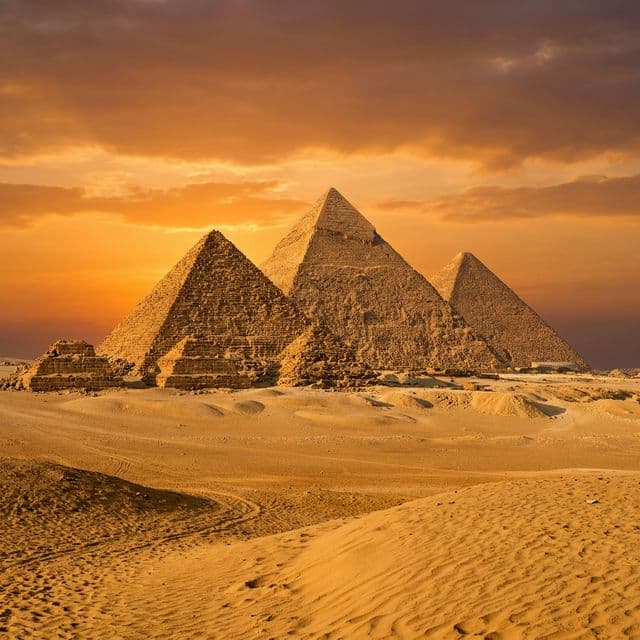
The Great Pyramids of Giza
Standing as the last surviving wonder of the ancient world, the Great Pyramids of Giza have awed travellers for over 4,500 years. Built as eternal tombs for the pharaohs Khufu, Khafre, and Menkaure, these colossal limestone structures rise from the desert plateau with breathtaking majesty. The Great Pyramid of Khufu was the tallest man-made structure on Earth for nearly 4,000 years — an engineering marvel that continues to inspire wonder and debate.
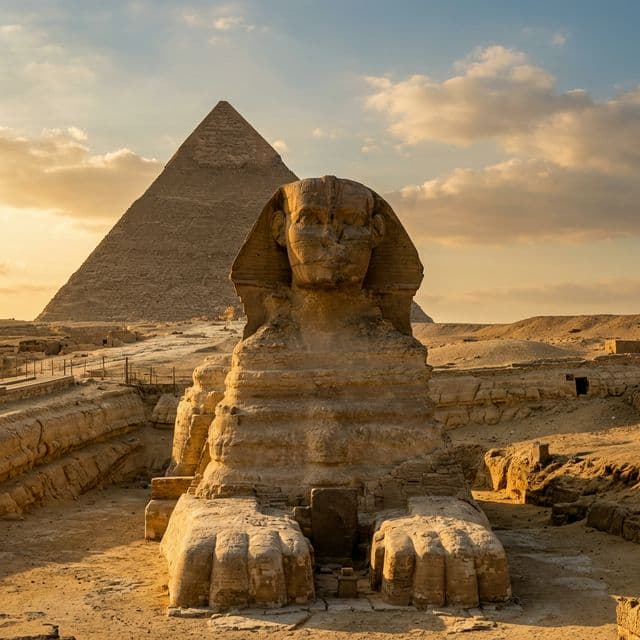
The Great Sphinx of Giza
Carved from a single massive limestone outcrop, the Great Sphinx is one of the world's most recognisable and enigmatic monuments. At over 73 metres long and 20 metres tall, this lion-bodied, human-headed statue has stood guard over the Giza Plateau for millennia. Its gaze fixed eternally toward the eastern horizon, the Sphinx continues to captivate archaeologists, historians, and visitors from every corner of the globe.
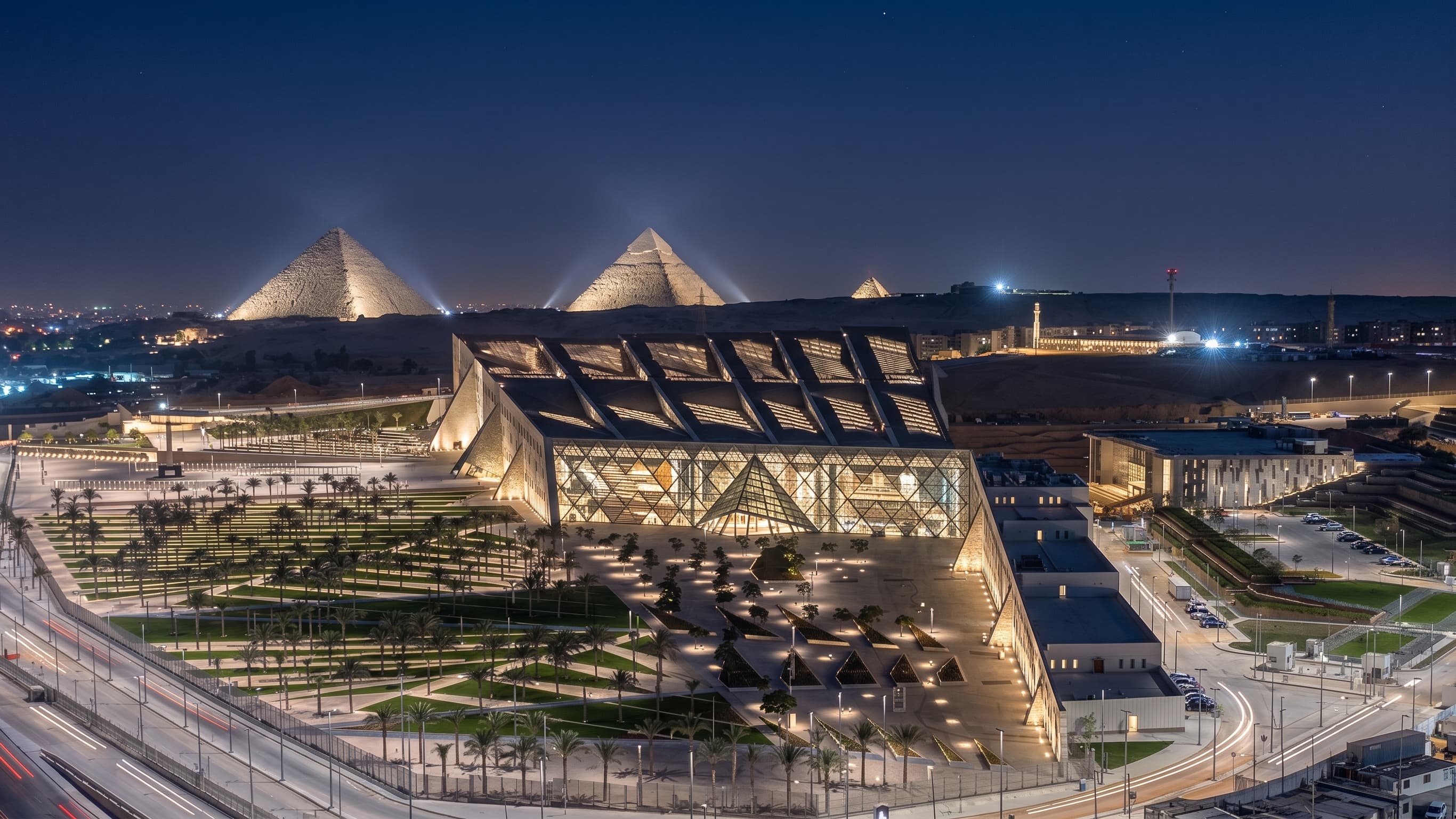
The Grand Egyptian Museum (GEM)
Known as the GEM, the Grand Egyptian Museum is the largest archaeological museum complex in the world dedicated to a single civilisation. Situated just two kilometres from the Giza Pyramids, this monumental architectural masterpiece houses over 100,000 ancient artefacts, including the complete, intact treasure collection of King Tutankhamun displayed together for the very first time. Its breathtaking grand staircase, towering 3,200-year-old colossus of Ramesses II, and panoramic vistas of the Pyramids create an unforgettable journey through Egypt's storied past.
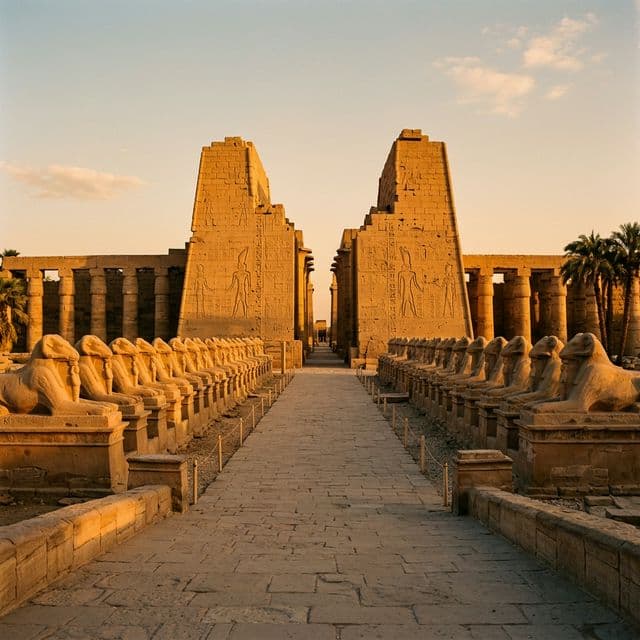
Karnak Temple
Karnak is not merely a temple but an enormous religious complex — the largest ancient religious site in the world. Built over more than 2,000 years by successive pharaohs, it encompasses a breathtaking collection of pylons, hypostyle halls, sacred lakes, and obelisks. The Great Hypostyle Hall alone contains 134 massive columns, its ceilings still bearing traces of vibrant ancient paint. Walking through Karnak is walking through the living history of ancient Egypt.
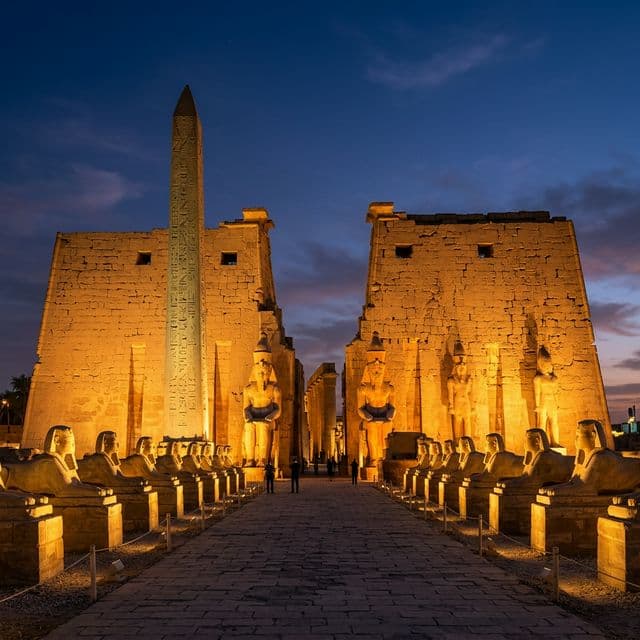
Luxor Temple
Unlike most Egyptian temples dedicated to a particular deity, Luxor Temple was devoted to the rejuvenation of kingship itself. Built by Amenhotep III and Ramesses II, its grand colonnaded courts and towering pylons are spectacularly illuminated after dark, creating an atmosphere of timeless magic. A lone ancient obelisk still stands at its entrance — its twin has adorned the Place de la Concorde in Paris since 1836. At night, the temple transforms into something truly otherworldly.
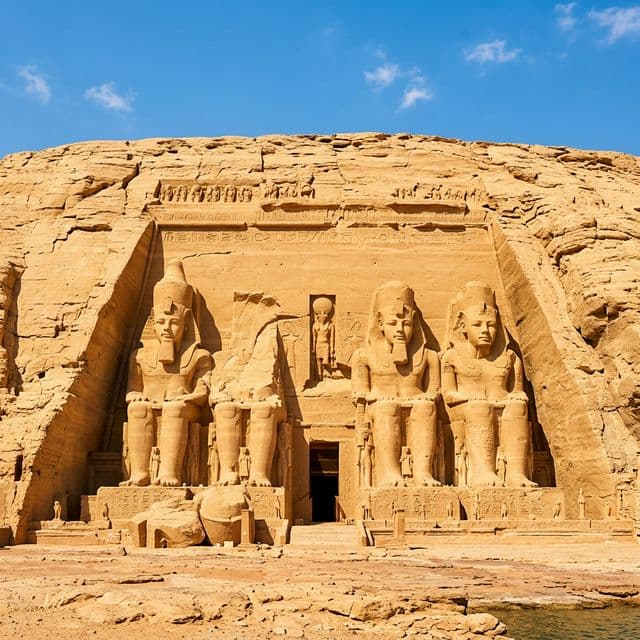
Abu Simbel
Carved directly into the living rock of a mountainside by Ramesses II over 3,200 years ago, Abu Simbel is one of Egypt's most spectacular and remote archaeological treasures. Four colossal statues of the pharaoh, each 20 metres tall, guard the entrance to the Great Temple. In a remarkable feat of 20th-century engineering, the entire complex was relocated in the 1960s to save it from the rising waters of Lake Nasser. Twice a year, sunlight penetrates the inner sanctuary to illuminate the statues of the gods within.
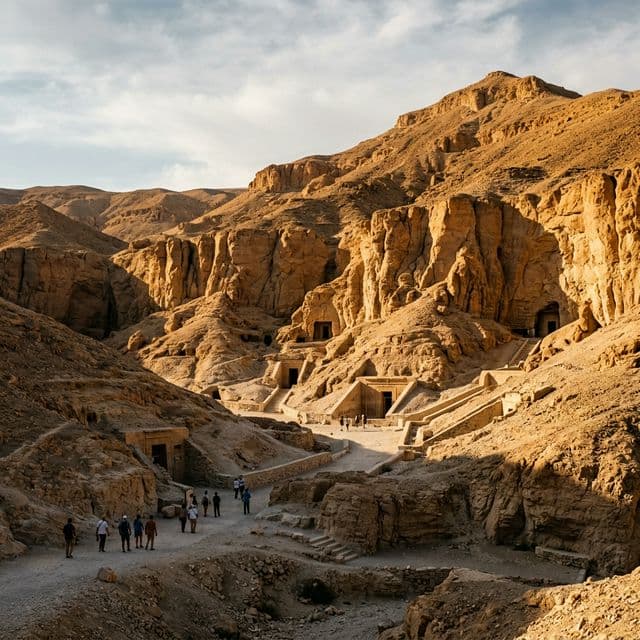
Valley of the Kings
For nearly 500 years, the Valley of the Kings served as the royal burial ground for the pharaohs and nobles of the New Kingdom. Hidden behind the dramatic limestone cliffs on the west bank of the Nile, over 60 tombs have been discovered here — their walls covered in vivid hieroglyphics and painted scenes intended to guide the deceased through the afterlife. The 1922 discovery of Tutankhamun's intact tomb by Howard Carter remains one of the greatest archaeological finds in history.
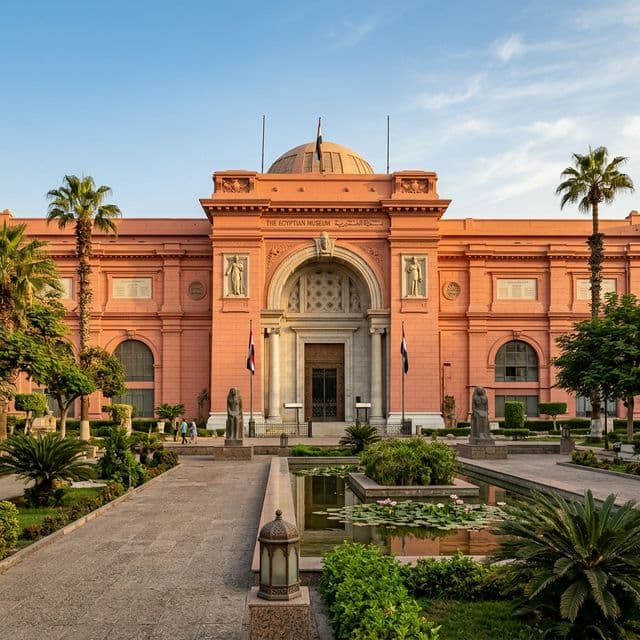
Egyptian Museum
Home to the world's most extensive collection of ancient Egyptian antiquities, the Egyptian Museum in Cairo is an experience unlike any other. Over 120,000 objects span more than 5,000 years of history — from prehistoric artefacts to Graeco-Roman mummies. The museum's crown jewels are the treasures of Tutankhamun, including his legendary golden death mask. The neoclassical pink building has stood in Tahrir Square since 1902, a beloved guardian of Egypt's incomparable heritage.
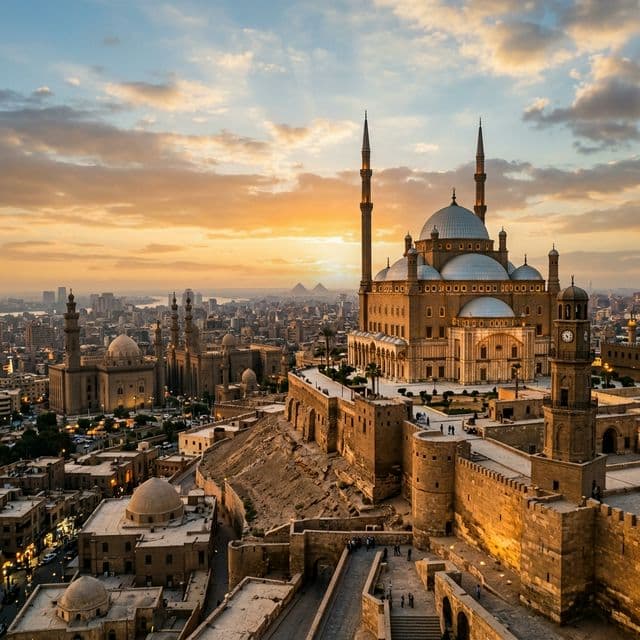
Citadel of Cairo
Perched dramatically on a spur of the Muqattam Hills, the Citadel of Cairo has dominated the city's skyline for over 800 years. Built by Saladin in the 12th century as a fortress against the Crusaders, it became the seat of Egyptian government for nearly 700 years. Its most iconic feature is the Muhammad Ali Mosque, an Ottoman masterpiece of alabaster domes and slender minarets completed in 1848. From its terraces, visitors enjoy sweeping panoramas over the great sprawling city below.
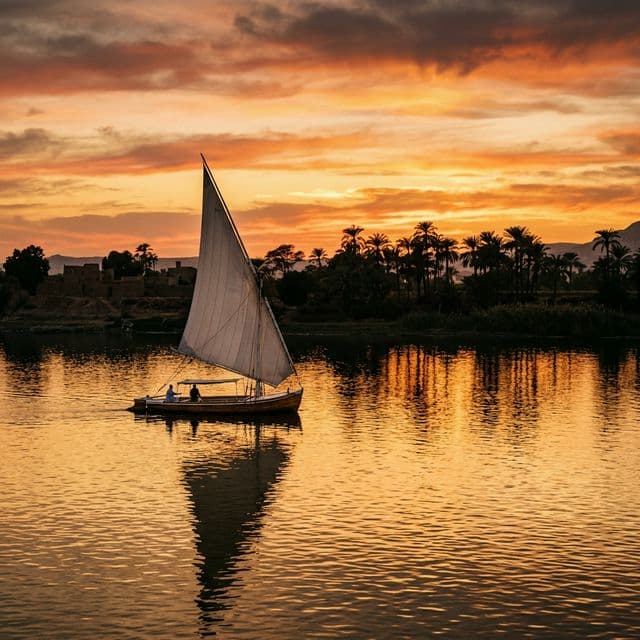
The Nile River
The Nile is not simply a river — it is the lifeblood of Egypt, the source of an entire civilisation, and one of the world's most legendary waterways. Stretching over 6,600 kilometres, it is the longest river on Earth. For thousands of years it nurtured pharaohs and farmers alike with its annual floodwaters. Today, a slow felucca cruise along the Nile at sunset — the sails of the ancient wooden boat billowing in the warm breeze, the riverbanks gilded in copper light — remains one of travel's most profoundly peaceful and beautiful experiences.
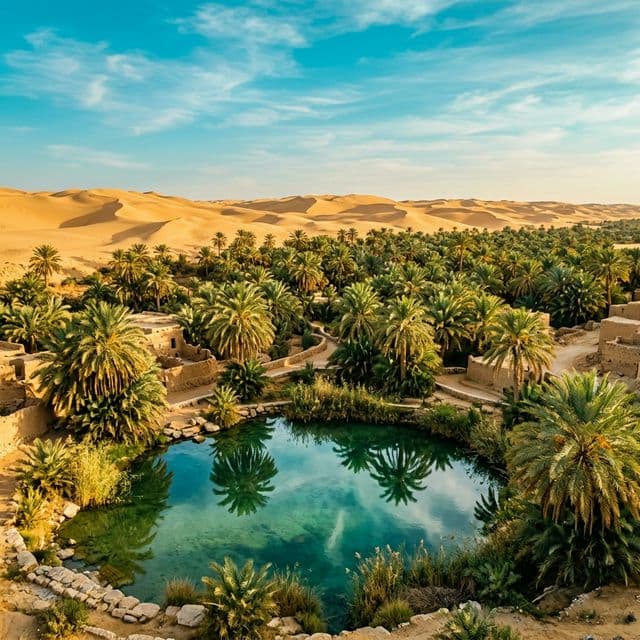
Siwa Oasis
Tucked in a remote depression of the Western Desert, close to the Libyan border, Siwa Oasis is one of Egypt's most magical and least-visited treasures. Famous since antiquity — Alexander the Great visited the Oracle of Amun temple here in 331 BC — Siwa remains a place apart, with its own Berber language, traditions, and architecture. Crystal-clear freshwater springs pool amid palm groves and olive orchards, while the encircling golden dunes glow rose-pink and amber at dusk. It is a world unto itself.
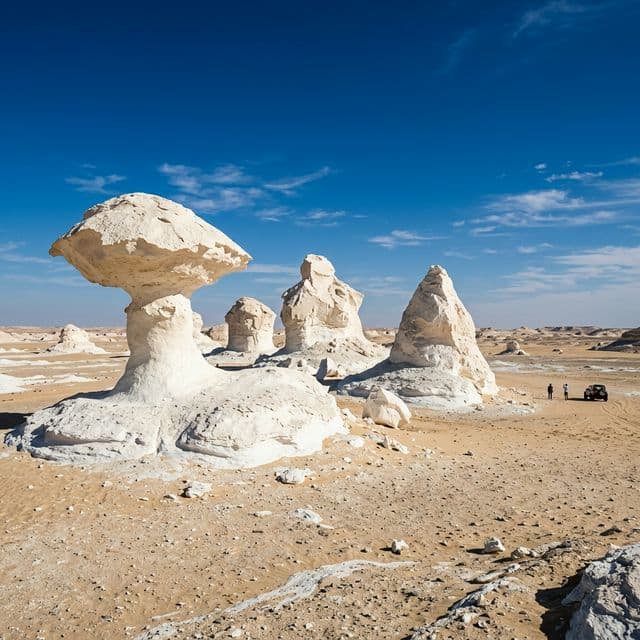
White Desert
Egypt's White Desert is one of the most surreal and otherworldly landscapes on the planet. Brilliant white chalk formations sculpted by centuries of wind erosion rise abruptly from the flat sandy floor — mushrooms, arches, and great white pinnacles standing like ghostly sentinels across the vast expanse. Protected as a national park, the White Desert is best experienced at dusk, when the setting sun ignites the rock formations in shades of gold and rose, or at night, under an impossibly star-crowded sky, when the white formations glow luminous in the moonlight.
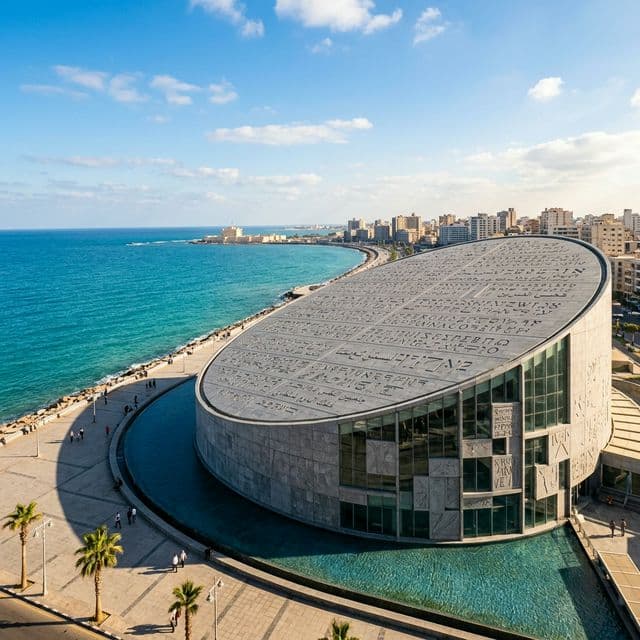
Bibliotheca Alexandrina
A monument to human knowledge and Mediterranean ambition, the Bibliotheca Alexandrina rises on the shores of Alexandria's harbour as a modern tribute to the legendary ancient Library of Alexandria — once the greatest repository of knowledge in the world. Inaugurated in 2002, the building's awe-inspiring tilted disc roof, etched with the scripts of 120 different ancient writing systems, is a work of architectural poetry. Inside, it houses millions of books, a planetarium, four museums, and four art galleries — a living cultural city of the mind.